Destination
St. Thomas Cruise Port
The Eastern Caribbean stop US travelers can reach without a passport — and the one where the pier you dock at decides your day.
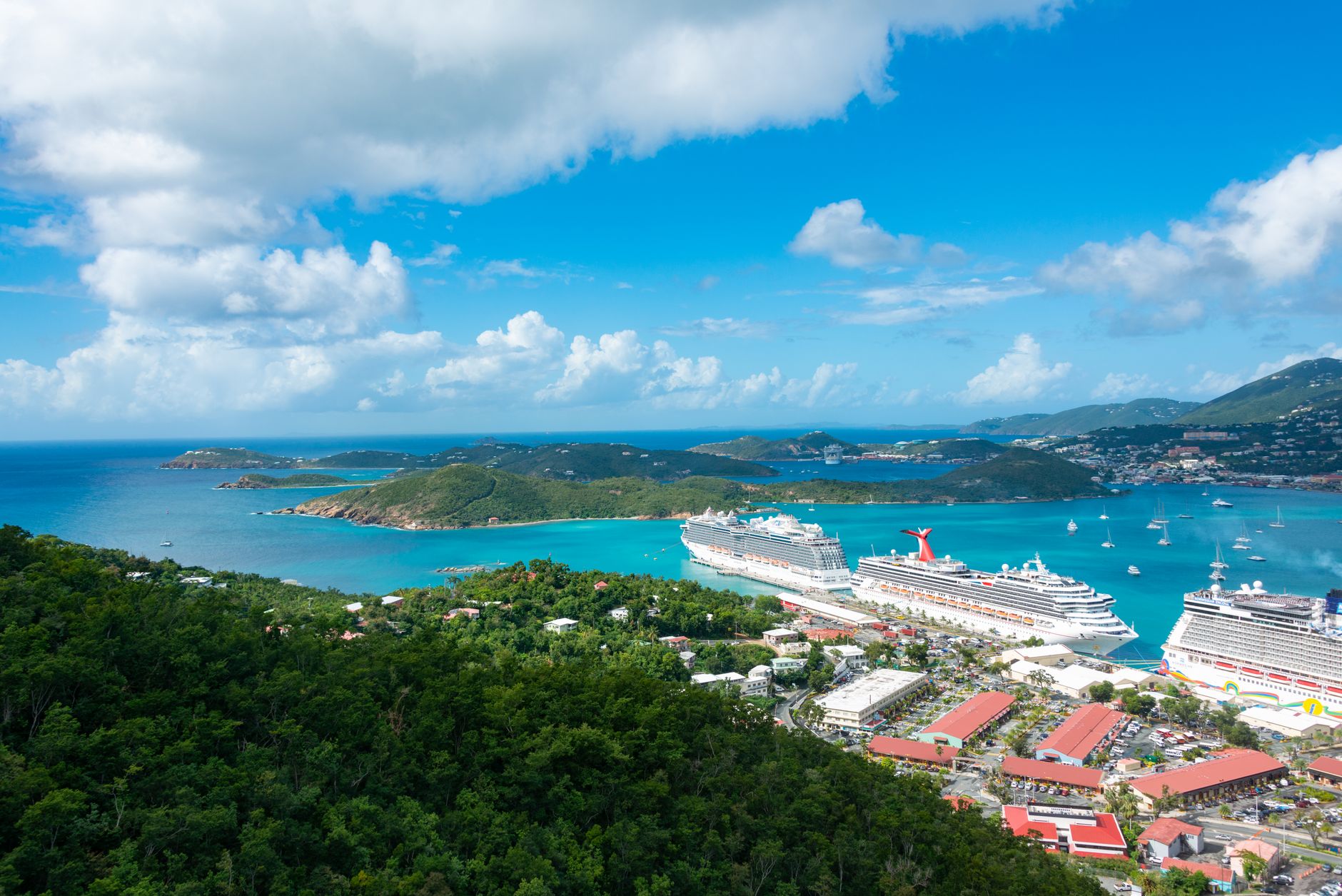
Why I Love It
St. Thomas is the easiest Caribbean day most American travelers will ever have. It is US territory, so there is no passport control at the pier, no currency to change, and mobile phones generally work on a domestic plan. For a family whose first concern is that nothing go wrong, that removes most of the ways a port day goes wrong.
What it is not is undiscovered. St. Thomas has been a cruise stop for decades and Charlotte Amalie is built around that — a dense, efficient, thoroughly commercial shopping district. Knowing that going in is the difference between a good day and a disappointed one.
In This Article
Which Pier You Dock At and Why It Matters
St. Thomas has two cruise piers, and the difference between them is the single most useful thing to know before you sail.
Havensight sits at the eastern edge of Charlotte Amalie, with a shopping complex at the berth and the town itself a walk or a very short taxi away. Crown Bay is on the other side of the harbor, has its own smaller shopping area, and is not realistically walkable into town.
Neither is bad. But a plan that begins “we’ll walk into Charlotte Amalie” only survives one of them, and which one you get is decided by the cruise line months before you think about it. Check your pier before you build the day around walking anywhere.
Both are proper berths — ships tie up alongside and you walk off. No tender, which is worth more than it sounds when your day is only seven hours long.
Shore Excursions: Booked Onboard vs. Independently
The tradeoff is the same everywhere and worth stating plainly: booking through the cruise line is insurance, not value. You pay more, and what you buy is that the ship waits if the excursion runs late. An independent operator carries no such promise.
On St. Thomas the risk is genuinely low for anything on-island — it is small, the roads are short, and operators run the same loops every day. Independent booking here is a defensible saving in a way it is not at ports with long transfers.
The exception is anything that leaves the island. The ferry across to St. John for Trunk Bay is the classic St. Thomas add-on and it is genuinely beautiful, but it puts a boat crossing between you and your ship on a schedule you do not control. That is the case for booking through the ship, and it is the one people most often get wrong because the independent price looks so much better.
How Long You Actually Get Ashore
A typical call runs roughly seven to nine hours, with all-aboard about half an hour before departure. Take off disembarkation and a taxi at each end and a nominal eight hours is closer to six of real time.
The pleasant surprise here is the time zone: the US Virgin Islands sit on Atlantic Standard Time and do not observe daylight saving, so for much of the year the local clock matches Eastern time. It is one fewer thing to get wrong. The habit still holds — work from ship’s time and ignore local clocks — but St. Thomas is far more forgiving on this than the Western Caribbean ports.
Six usable hours is enough for one thing done well. It is not enough for a beach, a shopping trip and a ferry to another island, however the excursion desk makes it sound.
Getting Around
Open-air safari taxis are the local standard and they run shared, on fixed per-person rates by destination rather than by meter. Confirm the fare and whether it is each way before you set off. They are genuinely pleasant and much of the island’s character is visible from one.
Two things regularly catch first-timers. They drive on the left — a genuine surprise in a US territory, and a real reason to think twice about renting a car for a few hours. And the island is steep: the distance to Magens Bay is short on a map and a proper climb in practice, which is why the drive takes longer than the mileage suggests.
US dollars are the currency, which removes the usual exchange-rate friction entirely.
Best Time to Go
Winter through spring is the most reliable stretch and also the busiest, with several ships in port on the same day being normal. That is felt hardest in Charlotte Amalie’s shopping streets and at Magens Bay, which can go from idyllic to crowded depending entirely on how many ships are in.
Hurricane season runs June through November. The real risk on a cruise is not weather at sea — ships route around storms — it is that your itinerary changes and St. Thomas is swapped for somewhere else. If this port is the reason you booked, that argues for sailing outside those months.
Who Shouldn’t Book This Port
If you are hoping for an unspoiled, uncommercial Caribbean day, this is the wrong stop. Charlotte Amalie’s waterfront is a duty-free shopping district and makes no apology for it. That suits plenty of people very well and will disappoint anyone expecting otherwise.
It is also a poor fit for travelers with real mobility limits who want to see the island rather than the pier. St. Thomas is steep, the good viewpoints and beaches involve climbing roads, and the safari taxis require a step up.
And if your group has no interest in beaches or shopping, six hours is a long time in a port whose two main offerings are beaches and shopping.
What Grant Actually Recommends
I have been to St. Thomas several times, and the best day I have had there was not an excursion. A Christian taxi driver took me around the island and showed me the parts that are not on the shopping map — an hour of someone’s actual home rather than a scheduled stop. I mention it because the island rewards that kind of day more than it rewards a packed itinerary, and because the drivers waiting at the pier are locals with their own opinions about where you should go.
Steward Travel is CLIA and IATA accredited through Outside Agents, which means real supplier quotes and the same access to rates and promotions any large agency has. On cruises the useful part of that is rarely the fare, which is fairly uniform — it is which sailing and which cabin genuinely suit you, and being told plainly when an itinerary is a poor fit for the people traveling.
For St. Thomas the advice that saves the most trouble is unglamorous: check which pier you are assigned, pick one thing rather than three, and keep anything involving the St. John ferry on the ship’s manifest. That is most of the difference between a good day and a rushed one. My own version of that is usually a beach I can snorkel from without a boat, and somewhere small and near the water for a drink afterwards.
Every booking carries the Gratitude Giving Program: a portion of the commission already inside the fare goes to a church, missionary or nonprofit you choose, at no extra cost to you.
Which line you sail with decides whether you dock at Havensight or Crown Bay, so the ship matters here as much as the port — the ocean cruise planning page covers how to pick between them.
Best time to go: Winter through spring for reliability; hurricane season (June–November) carries itinerary-change risk rather than storm risk
Good for: First-time cruisers, US travelers without passports, beach and shopping daysReady to Plan St. Thomas?
Every itinerary I build includes the Gratitude Giving Program — a portion of the commission already built into your trip is redirected to your church, missionary, or nonprofit, at zero extra cost to you.
Start Planning This Trip