Destination
Cozumel Cruise Port
One of the busiest cruise ports in the world — and the one where which pier you dock at changes your entire day.
Why I Love It
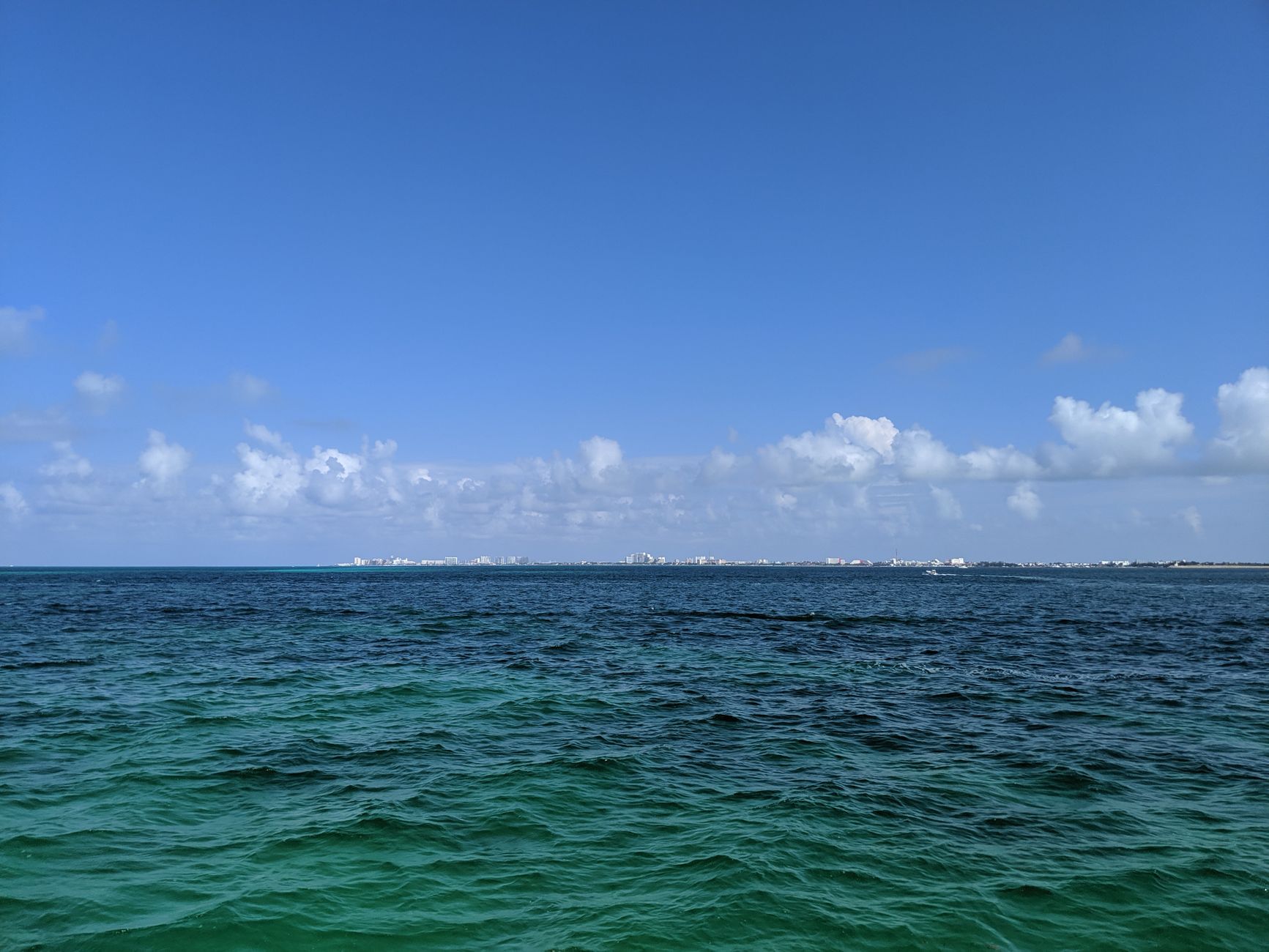
Cozumel is a diver’s port even if you never get in the water. The island sits on the Mesoamerican Barrier Reef — the second-largest reef system on earth — and the visibility off Palancar and Colombia is the kind that turns first-time snorkelers into people asking about certification classes on the walk back to the ship. That is also why I keep coming back to shore snorkeling here rather than booking a boat.
It is also one of the busiest cruise ports in the world, and that is the part worth understanding before you go. Cozumel handles enormous volume through three separate piers, and which one your ship ties up to is decided by the cruise line, not by you. It changes how far you are from town, what your taxi costs, and how much of your day you actually spend on the island rather than in a queue.
In This Article
Which Pier You Dock At and Why It Matters
Cozumel has three cruise piers, and they are not interchangeable.
Punta Langosta sits in downtown San Miguel. Dock here and you walk off the ship into the town itself — shops, restaurants and the ferry terminal are all within a few minutes on foot. No taxi, no negotiation, no transfer time.
The International Pier and Puerta Maya both sit a few miles south of downtown, near each other. Both have their own shopping and restaurant complexes right at the berth, which are pleasant and entirely designed for cruise passengers. Getting into San Miguel proper from either one means a taxi.
That is the whole difference, and it is not small. A couple who assumed they would stroll into town for lunch and instead find themselves negotiating a taxi in the heat have lost the first hour of a six-hour day. The pier assignment is usually published in your cruise documents shortly before sailing — and it is one of the few things worth checking in advance, because it determines whether “we’ll just walk into town” is a plan or a wish.
One genuine advantage over several other Western Caribbean stops: Cozumel is a docked port. Ships tie up alongside and you walk off. There is no tender queue eating an hour at each end of the day, which is exactly what happens at ports without deep-water berths.
Shore Excursions: Booked Onboard vs. Independently
The honest tradeoff, stated plainly: an excursion booked through the cruise line is insurance, not value. You will generally pay more than booking the same reef trip independently. What the premium buys is a guarantee — if a ship-sponsored excursion runs late, the ship waits. If an independent operator runs late, it does not.
For a reef trip that starts and ends within a few miles of the pier, that risk is small and the saving is real. For anything that leaves the island — and this is the important case — the calculation changes completely.
Tulum, Xcaret and Playa del Carmen are common Cozumel excursion sales, and every one of them requires a ferry crossing to the mainland and then a bus. That is a long day with two water crossings between you and your ship, on a schedule you do not control. This is the single clearest case for booking through the ship rather than independently, and it is the one where travelers most often do the opposite because the independent price looks so much better.
How Long You Actually Get Ashore
A typical Cozumel call runs roughly seven to nine hours, and all-aboard is normally half an hour before departure. Subtract the walk off the ship and the taxi at each end, and a nominal eight-hour day is closer to six and a half of usable time.
Then there is the time zone, which catches people every season. Quintana Roo — the Mexican state Cozumel belongs to — does not observe daylight saving time. Your ship runs on ship’s time, which may or may not match the island’s clock depending on the season and where the itinerary started.
The rule that keeps you on the ship: set your watch to ship’s time and never look at a local clock again. An independent tour operator quoting you a pickup in local time while you are mentally in ship’s time is how people watch their ship leave. Ask any operator explicitly which clock they are quoting.
Getting Around
Taxis are the default and they run on fixed zone rates rather than meters. Agree the fare before you get in — not because drivers are dishonest, but because the zone system is genuinely not obvious to a visitor and a misunderstanding is easier to prevent than to unwind.
Rented scooters and jeeps are widely offered and are how many people see the wilder east side of the island, which is beautiful and almost undeveloped. Be realistic about it: unfamiliar roads, unfamiliar signage, and a hard deadline to be back at the pier. It is a fine choice for confident drivers and a poor one under time pressure.
US dollars are accepted almost everywhere near the piers, usually at a rate that quietly favors the merchant. Pesos are better value if you have them; it is not worth a special trip to get them.
Best Time to Go
Cozumel works year-round, which is why it appears on so many itineraries. The real variable is hurricane season, June through November, peaking late summer into autumn.
Worth being clear about what that risk actually is on a cruise: the danger is not that you are caught in a storm — ships route around weather — it is that your itinerary changes. Cozumel gets swapped for another port, and you have no say in it. If Cozumel specifically is the reason you booked, that argues for sailing outside those months. If it is one stop among several you are happy with, the risk is mostly academic.
Winter and early spring bring the most reliable weather and the largest crowds. Multiple ships in port on the same day is normal here, and it is felt most in the downtown shops and at the popular beach clubs.
Who Shouldn’t Book This Port
Cozumel is a poor fit for travelers who want a quiet, uncommercial day. The areas immediately around the piers are built for cruise volume, and it shows. That is not a criticism — it is efficient, and it is what most people on a seven-hour call actually want — but if you are hoping to stumble into undiscovered Mexico, this is the wrong stop and you will be disappointed by lunchtime.
It is also the wrong port for anyone whose main interest is Mayan archaeology. San Gervasio, the ruins on the island, are genuinely worth seeing but modest. The famous sites are on the mainland, behind a ferry crossing, and that is a demanding way to spend a port day.
And if nobody in your group will go near the water, you are skipping the actual reason the port is on the itinerary. There is enough to do — but you would have a better day almost anywhere else on the route.
What Grant Actually Recommends
I have been into Cozumel three times on ships, and across to Cancún about a dozen times over the years, so this is a stretch of coast I know rather than one I have read about. What I do here is not what gets sold at the gangway: I would rather snorkel straight off the shore than pay for a boat that takes me somewhere I could have swum to, and I would rather eat at a small seaside place with six tables than at whatever is included in a package.
Steward Travel is CLIA and IATA accredited through Outside Agents, which means real supplier quotes and access to the same rates and promotions any large agency has. On cruise itineraries specifically, the useful part of that is usually not the fare — published cruise pricing is fairly uniform — it is which sailing and which cabin actually suits you, and being told plainly when an itinerary is a poor fit.
For Cozumel, the advice that saves the most trouble is the least glamorous: check your pier assignment before you sail, keep excursions that leave the island on the ship’s manifest, and stay on ship’s time all day. Those three things prevent almost every bad Cozumel day.
If you would like the reef trip that fits your group rather than the one being upsold at the gangway, that is worth a conversation before you book — not after. And every booking carries the Gratitude Giving Program: a portion of the commission already inside the fare goes to a church, missionary or nonprofit you choose, at no extra cost.
Cozumel is almost always one stop on a Western Caribbean itinerary rather than a destination in itself, so which ship and which sailing you pick decides how long you get here and what else you see — that is what the ocean cruise planning page works through.
Best time to go: Year-round; hurricane season (June–November) carries itinerary-change risk rather than storm risk
Good for: Snorkelers and divers, Western Caribbean cruisers, first-time cruisers who want an easy docked portReady to Plan Cozumel?
Every itinerary I build includes the Gratitude Giving Program — a portion of the commission already built into your trip is redirected to your church, missionary, or nonprofit, at zero extra cost to you.
Start Planning This Trip