Destination
Alaska Inside Passage Cruises
A certified specialist’s honest guide — named ships, real itinerary tradeoffs, and who shouldn’t book this trip.
Why I Love It
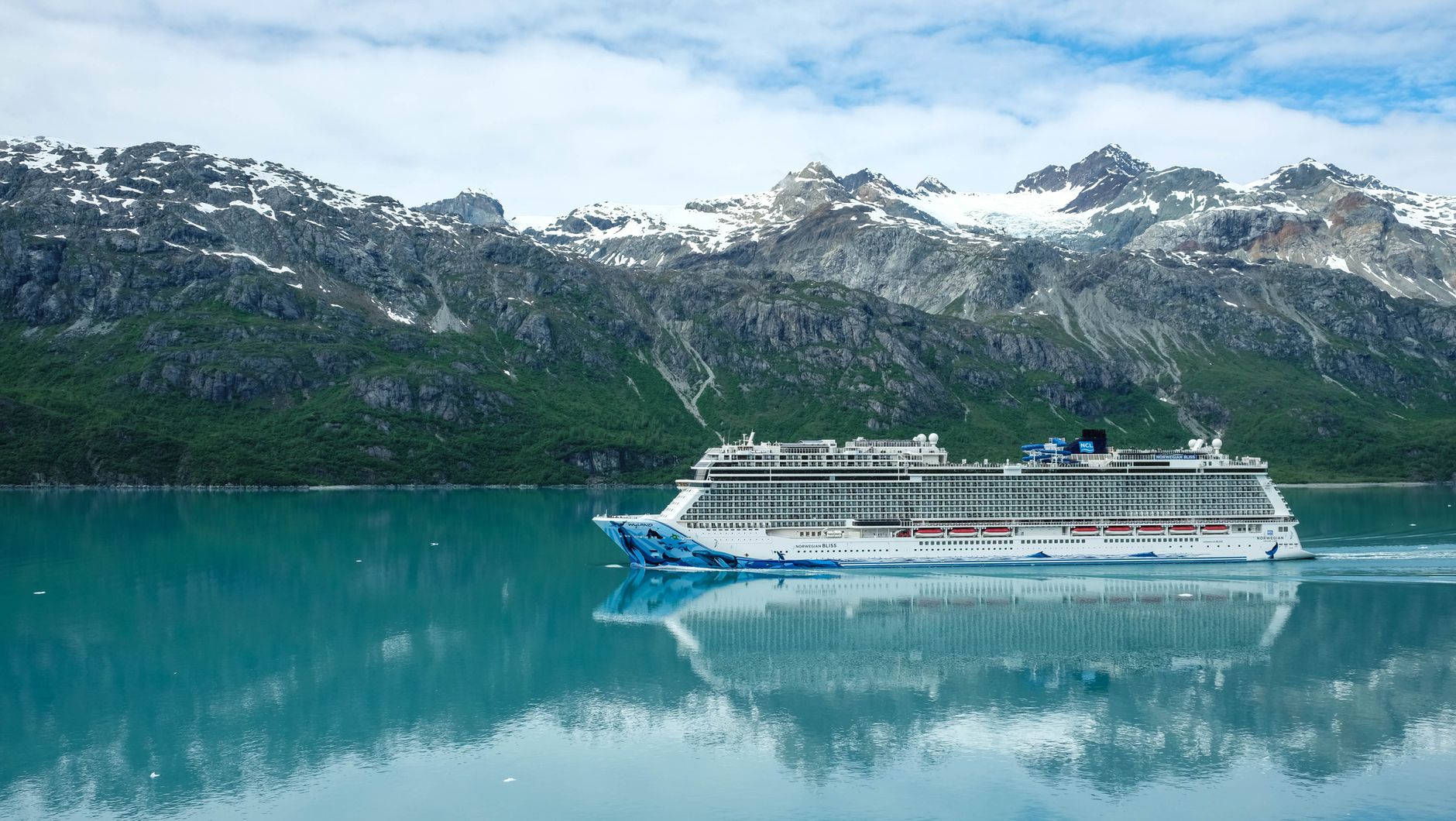
Alaska surprises people who’ve only ever thought of cruising as a Caribbean thing. The pace is slower, the scenery does most of the work, and there’s a real chance of watching a glacier calve or a humpback breach right from the ship’s rail. It’s a strong second-or-third cruise for families who’ve already done the beach-and-buffet version and want a trip that feels genuinely different — more National Geographic, less pool deck.
What most first-time Alaska cruisers don’t know going in is that “Alaska cruise” actually means two fairly different trips depending on the itinerary you book, and the cabin category that barely matters in the Caribbean matters quite a bit here.
In This Article
Round-Trip vs. One-Way: Two Different Trips
Most Alaska cruises run one of two itinerary shapes. A round-trip Inside Passage sailing leaves from and returns to Seattle or Vancouver, staying within the protected waterway the whole way — convenient, no one-way flight to coordinate, and typically calling at Ketchikan, Juneau, and Skagway with a day of glacier viewing at Tracy Arm or Endicott Arm.
A one-way Gulf of Alaska sailing runs between Vancouver and Whittier or Seward (the port towns for Anchorage), crossing open water and typically including Hubbard Glacier or College Fjord — generally regarded as more dramatic glacier scenery, but it requires flying into one coast and out the other, and it’s the itinerary that pairs naturally with a land tour to Denali or Fairbanks before or after the cruise.
Neither is the “right” one — they’re genuinely different trips, and which one fits depends on whether you want simplicity or you want to build a bigger Alaska trip around the cruise.
Named Cruise Lines and Real Tradeoffs
These are the lines worth knowing for Alaska, not every ship that sails the route.
Princess Cruises
The line most identified with Alaska historically — Princess also operates its own wilderness lodges and rail cars, which matters if you’re combining the cruise with a land tour. Strong naturalist programming on board. Good for a family or couple who wants Alaska expertise built into the cruise line itself, not just the itinerary.
Holland America Line
The other historically dominant Alaska line, with a similar land-tour-plus-cruise ecosystem (Westmark hotels, its own rail partnership) and a generally quieter, older-skewing ship culture than the mass-market lines. Suits a couple or retired traveler more than a family wanting kids’ programming.
Royal Caribbean
Larger, more activity-driven ships than the traditional Alaska lines, with more onboard entertainment and kids’ programming. Good for a family that wants a livelier ship experience alongside the scenery rather than a quieter, nature-focused cruise.
Norwegian Cruise Line
Freestyle dining and a more flexible onboard structure than the traditional lines. Suits a family or group that wants dining flexibility over the more structured, formal-night culture of Princess or Holland America.
Celebrity Cruises and Disney Cruise Line
Celebrity leans upscale and design-forward with strong glacier-viewing infrastructure on its newer ships. Disney sails a limited Alaska season and suits a family already loyal to the Disney onboard experience more than one choosing Alaska on the ship’s own merits.
Cabin Choices: Why Balcony Matters More Here
In the Caribbean, an inside or oceanview cabin is a perfectly reasonable way to save money — you’re mostly on deck or off the ship anyway. Alaska is different: scenic cruising through Tracy Arm, Hubbard Glacier, or Glacier Bay happens over hours, often in cold weather where standing on deck the whole time isn’t realistic, and a private balcony means you can step outside for ten minutes and then warm back up without losing the view. A balcony is worth the upgrade here if the budget allows it, more so than on a typical Caribbean sailing.
Port Towns and What to Expect
Ketchikan is known for salmon fishing and Tlingit totem pole history. Juneau, Alaska’s capital and reachable only by air or sea, is the jumping-off point for Mendenhall Glacier and most whale-watching excursions. Skagway leans into its Gold Rush-era history, with the White Pass railway as its signature excursion. All three are small enough to walk in a few hours, and shore excursions here tend to be wildlife- and history-focused rather than beach- or nightlife-focused.
Best Time to Sail
The Alaska cruise season runs May through September and is firm on both ends — ships simply aren’t there the rest of the year. Late May and September are shoulder season: fewer crowds and lower rates, with a real chance of cooler weather. June through August is peak season, warmer and busier, and the best window for whale sightings.
Is Alaska a Good Cruise for Families?
Yes, with one honest caveat: it depends far more on ages than on the ship. Alaska’s draw is scenery and wildlife, not water slides, and that lands very differently on a fifteen-year-old than on a four-year-old. Teenagers tend to remember an Alaska sailing for years. Younger children often spend the scenic days indoors wondering when the pool opens.
The tradeoff nobody mentions is that ship choice matters more here than on any other itinerary, and it cuts against families. The big ships with the best kids’ clubs and the most onboard entertainment are the ones least able to work the narrow passages and the smaller glacier inlets. The ships that get you closest to the ice are the ones with the least for a child to do when the view stops being interesting. There is no ship that wins both, so the real question is which half of that your family would rather have.
Glacier days are also long viewing days — hours of standing on deck in the cold waiting for calving that may or may not happen. That is the best day of the trip for some travelers and the hardest one for a family with small children, and it is worth knowing which you are before you book.
Budget honestly for clothing, too. Layers and genuine rain gear for four people is a real line item that Caribbean sailings never ask for, and renting is rarely practical.
The actual family budget lever is the shoulder season. Early May and September sailings run materially cheaper than the July peak, and the tradeoff is straightforward: cooler, wetter, and shorter days, against noticeably fewer people at every port stop. For a family whose children are old enough to be dressed for weather rather than entertained through it, that is the single biggest saving available on an Alaska cruise — and it is the question worth asking before you pick dates, not after.
Who Shouldn’t Book an Alaska Cruise
This trip isn’t the right fit for everyone, and I’d rather say so before you book than after. If you want guaranteed warm weather and beach time, Alaska summer regularly sits in the 50s and 60s Fahrenheit — this is not a lay-by-the-pool trip, even in July. If you want a lively, nightlife-driven ship atmosphere, Alaska sailings skew toward an older, quieter, nature-focused crowd, even on the mass-market lines. And if guaranteed wildlife or glacier viewing matters to you, nature doesn’t make promises — fog, weather, and animal behavior can affect any single day, on any itinerary.
Where an Alaska cruise wins decisively is scenery and a genuinely different pace than a typical cruise vacation — if that’s what you’re after, few trips deliver it as reliably.
What Grant Actually Recommends
Here’s how I’d think through Alaska with you: the two questions I’d ask first are round-trip or one-way, and how much the cabin category actually matters for what you want to see. Getting those two right does more for how the trip actually feels than which specific ship you end up on.
As a certified cruise specialist accredited through Outside Agents, I can pull real current itinerary and cabin pricing across these lines and get you a straight answer, rather than sending you to a booking site to guess.
If you’re weighing Alaska against other cruise options, my ocean cruise planning page walks through how I help you choose the right fit before you book.
Ready to Plan Alaska’s Inside Passage?
Every itinerary I build includes the Gratitude Giving Program — a portion of the commission already built into your trip is redirected to your church, missionary, or nonprofit, at zero extra cost to you.
Start Planning This Trip